Head to head
First Ward vs Second Ward
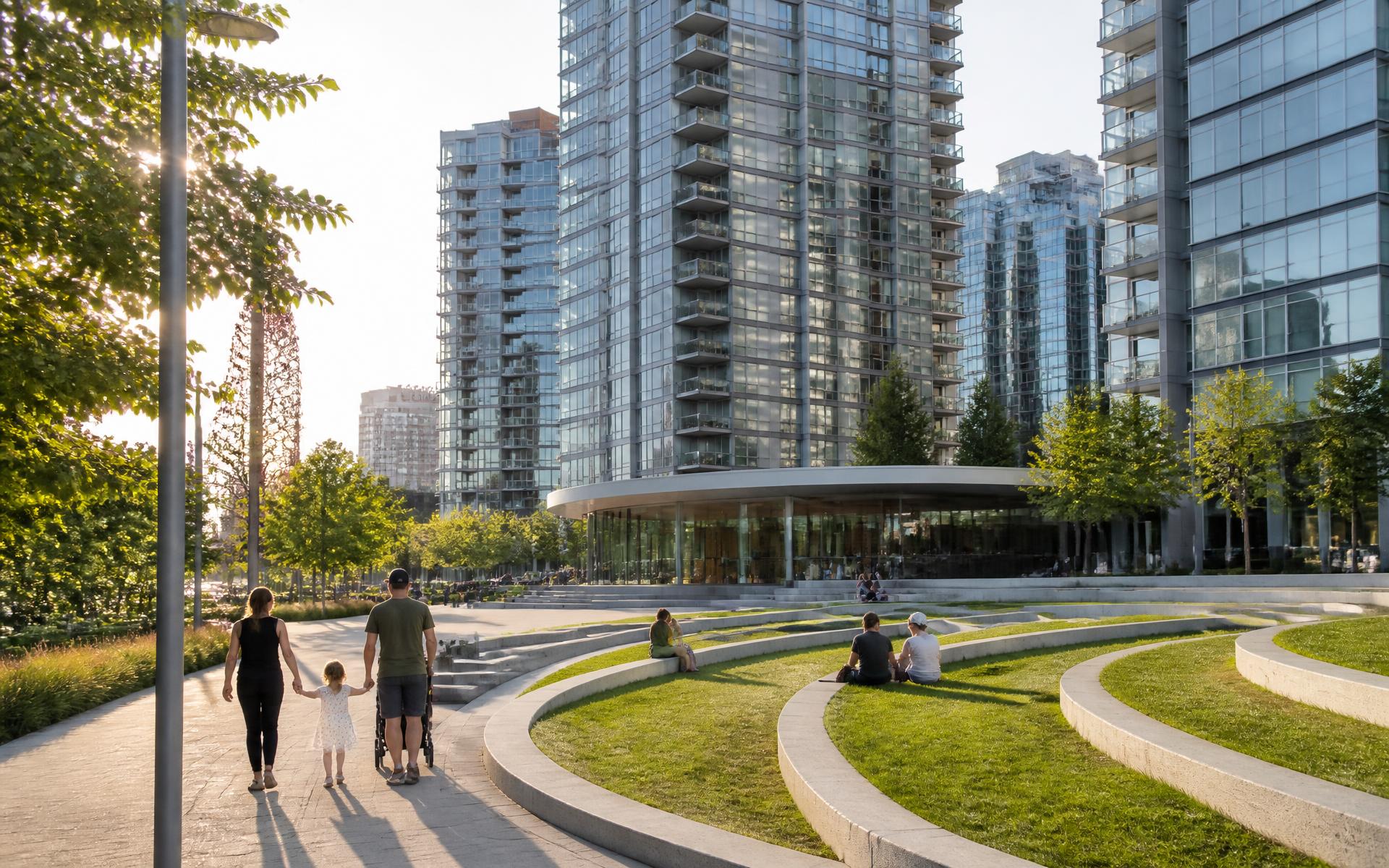
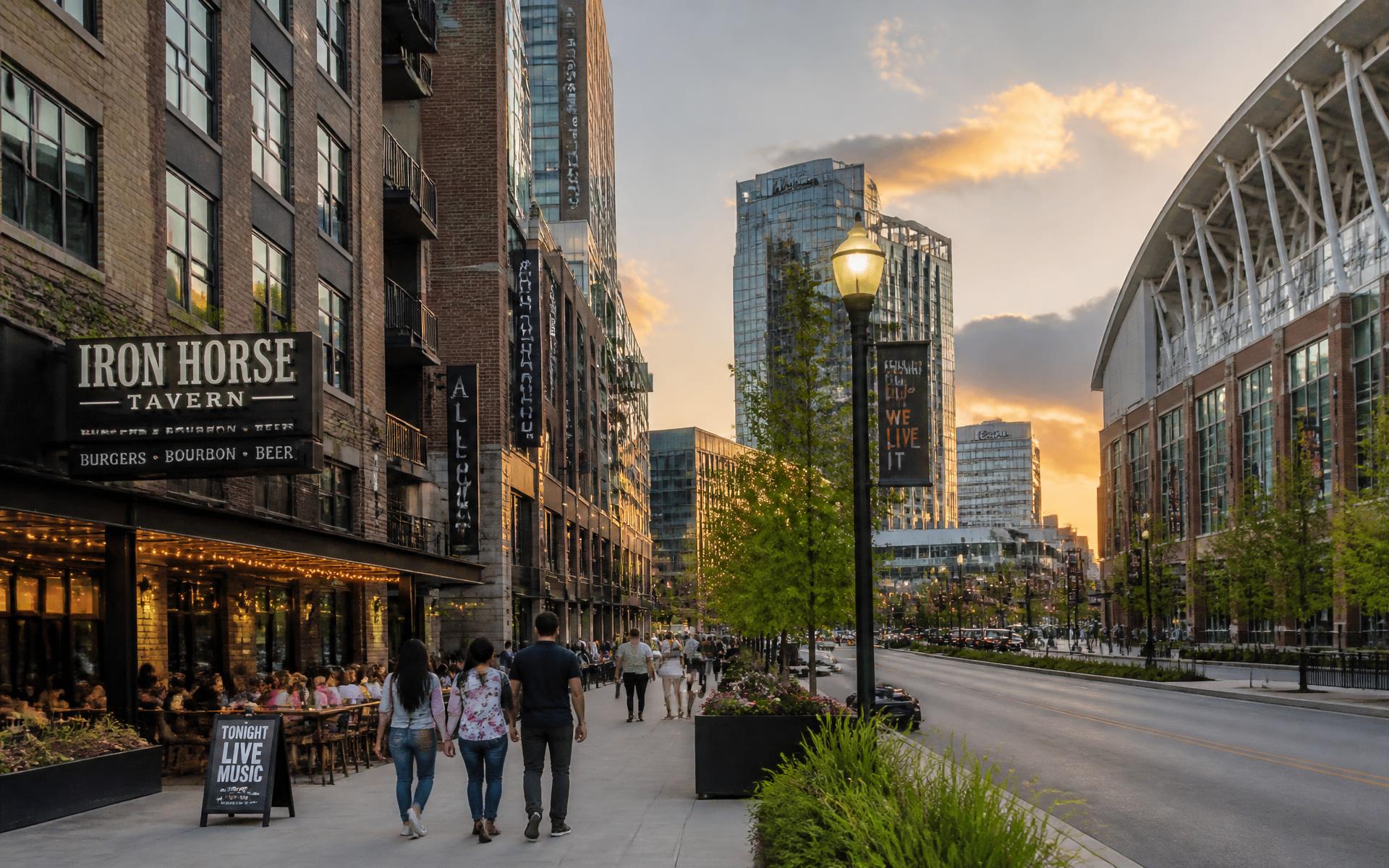
The northeast and southeast quadrants sit two blocks apart and behave nothing alike. First Ward is the closest thing Uptown has to a planned residential neighborhood; Second Ward is Uptown's event ward, driven by a convention and arena calendar and a redevelopment story that has not finished.
Factor by factor
The table
| Factor | First Ward | Second Ward |
|---|---|---|
| Character | Planned residential fabric around a five-acre park | Institutional and event blocks with thin residential inventory |
| Housing vintage | Mostly 2010s and newer mid-rise condominium and apartment | Rental apartments and hotel-residence hybrids on Stonewall and College |
| Daily errands | 7th Street Public Market plus a full grocery on the Tryon corridor | Convention food halls and hotel dining; groceries require a walk north |
| Noise profile | Quiet after nine except on park event nights | Set by the calendar — silent Tuesday, saturated on a Hornets-plus-convention Saturday |
| Schools inside the ward | First Ward Creative Arts Academy (CMS creative-arts magnet) | Trinity Episcopal School (K–8 independent) |
| Transit | 7th Street Blue Line station plus the Gold Line on Trade | CTC/Arena station — light rail and the regional bus hub in one node |
| Green space | First Ward Park, plus the Little Sugar Creek Greenway edge | Marshall Park, inside the Brooklyn Village redevelopment footprint |
| Pricing pattern | Premium for park-facing glass; interstate-facing lines trade below | Historically the loop's value quadrant for comparable finishes |
| Biggest risk | Limited historic character; almost everything reads as one decade | Redevelopment timing — value leans on the Brooklyn Village schedule |
Choose First Ward if
- You want newer construction with efficient floor plans and an amenity deck.
- A park you can see from the window matters more than square footage.
- You have young children and want Discovery Place, a magnet elementary and a market within a walk.
- You want to live car-light without planning around an event calendar.
Choose Second Ward if
- You want the best price per square foot inside the loop and can accept an institutional amenity base.
- You attend Hornets games, concerts or conventions often enough that walking to them changes your week.
- You want the strongest single transit node in Uptown at your door.
- You are comfortable underwriting a redevelopment timeline rather than a finished neighborhood.
The verdict
For daily residential life, First Ward wins on nearly every metric that shows up on a Tuesday. Second Ward wins on price and on transit, and it carries the larger upside if Brooklyn Village delivers. Buyers choosing between them are usually choosing between a finished neighborhood and a discounted bet.
Interactive map
Both quadrants on the map
Filter by towers, museums, stadiums, parks, transit, schools and markets to see how First Ward and Second Ward sit relative to one another inside the loop.
The Wards
Independence Square
All four wards · Center
Trade and Tryon — the corner where the four wards meet, marked by the four bronze statues of Commerce, Industry, Transportation and the Future.
Browse 36 places
Trusted local resource
Buying, selling, or leasing inside the four wards
Center City pricing is building-specific, not neighborhood-specific: two towers on the same block can trade fifteen percent apart on the strength of association reserves, parking ratios, and view corridors. Peters & Associates advises buyers and sellers across Uptown with that building-by-building read.
Real estate advisory
Peters & Associates
Advertising disclosure. This is a paid or affiliated relationship: the firm above is affiliated with or compensates the publisher of this independent guide, and contacting it may result in a commercial engagement. It does not buy editorial placement. Full disclosure.
Questions & Answers
First Ward vs Second Ward, answered
Direct answers to what readers most often ask about this part of Uptown. Each answer cites the primary source it rests on.
All Uptown Charlotte questions →Is First Ward or Second Ward better for families?
+
First Ward, clearly. It contains First Ward Creative Arts Academy, First Ward Park, Discovery Place Science and the 7th Street Public Market within a few blocks. Second Ward has Trinity Episcopal School but a much thinner residential and everyday-errand base. Confirm any specific school assignment with the Charlotte-Mecklenburg Schools locator.
Which is quieter, First Ward or Second Ward?
+
First Ward on most nights. Second Ward's noise is event-driven rather than constant: an open weekday is the quietest in Uptown, while an arena event plus a convention brings traffic and late load-out noise to College and Trade Street blocks. Floor and orientation change the experience substantially.
Is Second Ward cheaper than First Ward?
+
Historically yes for comparable finishes, largely because Second Ward's amenity base is institutional and its residential inventory thinner. Verify current pricing against recorded sales in Mecklenburg County POLARIS and Canopy MLS market reports rather than relying on general patterns.
Read next
Other pairings
First Ward vs Third Ward
Both quadrants are genuinely livable, and both are organized around a park. The difference is what surrounds the park: First Ward's neighbors are a museum, a market and a university campus; Third Ward's are a ballpark, an NFL stadium and four arts institutions on one corner.
ReadFirst Ward vs Fourth Ward
This is the closest matchup in Uptown, because both quadrants are residential first. It comes down to vintage: First Ward was built in a decade, and Fourth Ward was built across a century and then restored.
ReadSecond Ward vs Third Ward
Both are event quadrants, and both sit south of Trade Street. Third Ward converted its venues into a neighborhood with restaurants, parks and residential towers; Second Ward has the venues and is still assembling the neighborhood.
ReadSecond Ward vs Fourth Ward
These are the two extremes of Uptown living. Fourth Ward is the quietest, most established, most residential quadrant. Second Ward is the loudest on the right night, the thinnest residentially, and the one with the most left to be built.
ReadCommunities & Buildings
Compare the actual buildings, not just the wards.
ReadWard Itineraries
Walk both quadrants before you decide.
ReadOur Sources
How this page was researched
This guide is independently written and verified against primary public records and official organizations. It is not affiliated with, endorsed by, or representing the City of Charlotte, Charlotte Center City Partners, any condominium association, or any building owner.
Read our full citation methodology and editorial standards- 01State of the Center City report and development pipeline
Charlotte Center City Partners
Residential population, office inventory, and project pipeline for Uptown.
- 02POLARIS 3G property and parcel records
Mecklenburg County GIS
Parcel boundaries, building footprints, ownership, and sale history.
- 03Property tax and assessed value records
Mecklenburg County Assessor's Office
Assessed values, revaluation cycles, and tax rates by parcel.
- 04School assignment and boundary lookup
Charlotte-Mecklenburg Schools
Assignment zones and school information for Uptown addresses.
- 05LYNX Blue Line, CityLYNX Gold Line, and bus network
Charlotte Area Transit System
Rail and streetcar stations, headways, and Uptown transit access.
- 06Local historic districts and designated landmarks
Charlotte-Mecklenburg Historic Landmarks Commission
Fourth Ward historic district and individually designated buildings.
Figures such as pricing, dues, assessments, tenancy, and school assignment change over time. Always confirm current details directly with the source before making a decision.