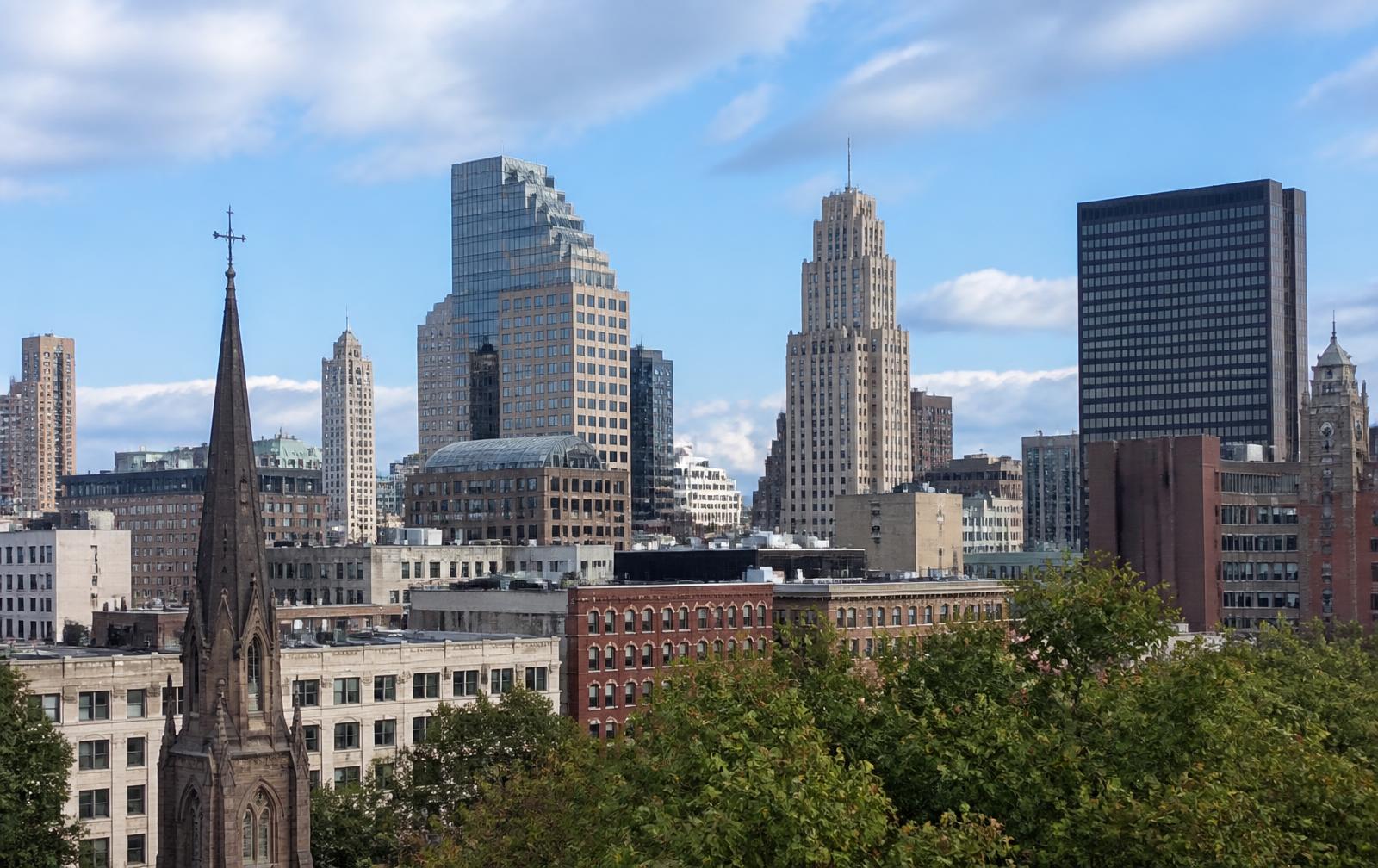
Contrast between Uptown Charlotte's towers and the Rail Trail corridor toward South End

Head to head

Uptown vs. South End Charlotte: an objective comparison

Housing, condos, apartments, nightlife, restaurants, sports, transit, the Rail Trail, walkability, development, parking and daily lifestyle — Uptown and South End compared without declaring a winner.

Two districts, one Blue Line, very different daily lives.

Uptown and South End sit next to each other, share the LYNX Blue Line, and are often mentioned in the same breath by anyone relocating to Charlotte — but they are built differently and they live differently. Uptown is the historic four-ward core inside the I-277 loop; South End is the former industrial and rail corridor immediately south of the loop, rebuilt over the last two decades around the Rail Trail and the light rail line.

This page compares them factor by factor. Neither is universally better — the right answer depends on what a household actually wants day to day.

The loop separating the two districts
I-277
Light rail connecting Uptown and South End
Blue Line
South End's defining public space
Rail Trail
South End's typical building stock vs. Uptown's mix
Newer

01

Housing stock: towers vs. converted-industrial mid-rise

Uptown's housing is concentrated in high-rise condominium and apartment towers, with the age and finish level varying widely by ward — Fourth Ward's towers are generally older, First Ward's are generally newer. South End's residential stock is dominated by mid-rise apartment buildings and condo conversions built over former textile and rail-yard land, with far fewer true high-rises than Uptown.

Someone who wants a 30th-floor skyline view has more options in Uptown; someone who wants a mid-rise unit with exposed brick or a converted-warehouse character has more options in South End.

02

Condos and apartments: inventory and pricing pattern

Uptown's condominium market includes some of Charlotte's oldest continuously occupied high-rise product alongside newer towers, while South End's condo stock is almost entirely 2000s-and-later construction. Apartment supply has grown quickly in both districts over the past decade; South End in particular has added a large volume of new apartment units along the rail corridor.

Pricing per square foot in both districts is driven by building age, view corridor and proximity to transit rather than by which district it's in — always confirm current figures through recent recorded sales and Canopy MLS market reports rather than assuming one district is categorically less expensive.

03

Nightlife and restaurants

Uptown's nightlife is concentrated around Second Ward's Convention Center and arena blocks, with a calendar-driven intensity tied to Hornets games, concerts and conventions. South End's nightlife and dining scene is denser and more consistently active night to night, built around breweries, restaurant rows near the Rail Trail, and a younger, less event-dependent crowd.

Uptown's restaurant strength leans toward business dining, hotel restaurants and pre-theater or pre-game meals; South End's leans toward casual, independent restaurants and breweries clustered for walkable hopping.

04

Sports and stadiums

All three of Charlotte's major professional venues — Bank of America Stadium, Spectrum Center and Truist Field — sit inside Uptown, in Third and Second Ward specifically. South End has no comparable venue of its own, though it absorbs significant overflow foot and rideshare traffic from Uptown events via the Rail Trail and Blue Line on game and concert nights.

05

Transit, the Rail Trail, and getting around

The LYNX Blue Line runs directly between the two districts, making a car-free commute between Uptown and South End realistic for many residents. South End's signature public-space asset is the Rail Trail, a linear path along the light rail corridor lined with restaurants, breweries and public art — Uptown has no exact equivalent, though its park network (First Ward Park, Romare Bearden Park, Marshall Park) serves a similar social function in a different form.

Walkability is strong within each district individually; walking between them means crossing the I-277 loop, a grade-separated crossing covered in detail on the walkability page.

06

Development, parking and daily lifestyle

South End has seen more continuous new-construction activity over the past fifteen years than any single Uptown ward, though Second Ward's Brooklyn Village plans represent Uptown's largest pending opportunity. Parking in both districts is predominantly structured rather than on-street, and both carry event-driven congestion on game and concert nights.

Daily lifestyle is the clearest differentiator: Uptown is built around a business-district daytime rhythm punctuated by evening and weekend events, while South End runs on a more consistent day-and-night rhythm centered on dining, breweries and the Rail Trail itself.

Questions & Answers

Frequently asked questions

Direct answers to what readers most often ask about this part of Uptown. Each answer cites the primary source it rests on.

All Uptown Charlotte questions →

Is Uptown Charlotte or South End better to live in?

+

Neither is universally better. Uptown suits residents who want high-rise living, proximity to stadiums and arenas, and a business-district daytime rhythm. South End suits residents who want mid-rise apartment or condo living, a dense walkable restaurant and brewery scene, and the Rail Trail as a daily amenity.

Source: Charlotte Area Transit System — LYNX Blue Line & CityLYNX Gold Line

How do you get between Uptown Charlotte and South End?

+

The LYNX Blue Line light rail connects the two districts directly, and many residents also walk or bike the Rail Trail and its connections across the I-277 loop, though that crossing is grade-separated and less comfortable than walking within either district.

Source: Charlotte Area Transit System — LYNX Blue Line & CityLYNX Gold Line

Is South End part of Uptown Charlotte?

+

No. South End is a separate district immediately south of the I-277 loop. Uptown refers specifically to the four wards enclosed by the loop.

Source: City of Charlotte

Are condos cheaper in South End than Uptown?

+

It varies by building age, floor and view rather than by district alone. South End's condo stock is generally newer construction than parts of Uptown, but pricing should always be checked against current recorded sales and Canopy MLS market reports rather than assumed.

Source: Blumenthal Arts and the Levine Center for the Arts

Topic Cluster

Uptown Real Estate & Market

How Center City pricing actually works, building by building.

The Uptown Guide — Uptown Real Estate & Market

Our Sources

How this page was researched

This guide is independently written and verified against primary public records and official organizations. It is not affiliated with, endorsed by, or representing the City of Charlotte, Charlotte Center City Partners, any condominium association, or any building owner.

Read our full citation methodology and editorial standards
  1. 01
    State of the Center City report and development pipeline

    Charlotte Center City Partners

    Residential population, office inventory, and project pipeline for Uptown.

  2. 02
    LYNX Blue Line, CityLYNX Gold Line, and bus network

    Charlotte Area Transit System

    Rail and streetcar stations, headways, and Uptown transit access.

  3. 03
    Charlotte-region housing market reports

    Canopy Realtor® Association / Canopy MLS

    Price, inventory, and days-on-market trends for the 28202 market.

  4. 04
    POLARIS 3G property and parcel records

    Mecklenburg County GIS

    Parcel boundaries, building footprints, ownership, and sale history.

Figures such as pricing, dues, assessments, tenancy, and school assignment change over time. Always confirm current details directly with the source before making a decision.