Journal · October 6, 2026
Fourth Ward walking notes from the quietest corner
A close walk through Fourth Ward follows Victorian porches, Settlers Cemetery and the calmer residential blocks of Center City.
Fourth Ward walking notes begin with a small adjustment in pace. This part of Uptown Charlotte asks less of a visitor than Tryon Street, College Street or the stadium blocks, yet it reveals a great deal about how Center City holds different moods within the same I-277 loop. A walk here is not about covering distance. It is about noticing how Victorian houses, narrow sidewalks, old trees, courtyard entries and a historic cemetery share the street with towers visible over the rooflines.
The slower edge of Uptown
Fourth Ward sits in the northwestern quadrant of Uptown, close enough to the business core for skyline views and far enough from the most heavily trafficked corridors to feel residential. The ward is not removed from Center City; it is one of its essential layers. A turn off a busier avenue can quickly exchange office lobbies and structured parking for porches, stoops, garden walls and apartment entries set back from the sidewalk.
That change is part of the ward's appeal. It does not pretend to be a village outside the city. Instead, Fourth Ward works as a quieter urban room within it. The soundscape shifts by block: delivery trucks, church bells, dogs behind fences, weekday office movement, evening restaurant traffic at the edges, and long pauses where the street seems to rest. The quiet is relative, but in Uptown terms it can feel distinct.
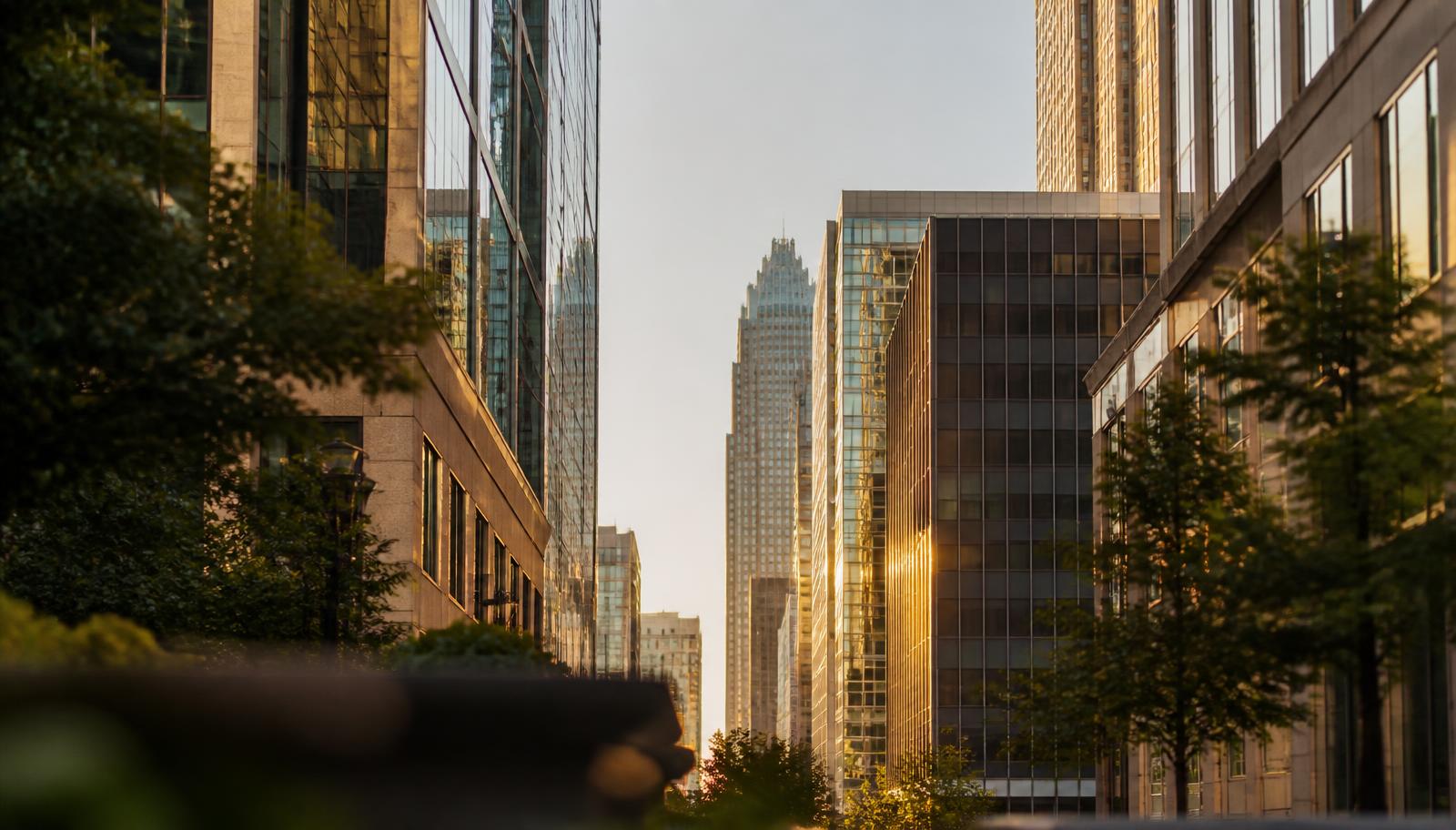
These Fourth Ward walking notes are best treated as observations rather than an itinerary. The area rewards a loose route, particularly because the most interesting views often come from looking diagonally across an intersection or back over a shoulder, where a restored facade, a mature canopy and a glass tower briefly sit in the same frame.
Victorian streets without a museum rope
Fourth Ward's Victorian character is part of its public identity, but the neighborhood is not a preserved stage set. It is lived in, adapted and surrounded by the daily mechanics of Center City. That combination is what gives the streets their tension. Painted trim, generous porches and decorative woodwork are visible from the sidewalk, yet nearby are condominiums, offices, institutional buildings and the constant vertical backdrop of Uptown.
The best walking rhythm is slow enough to read the details without treating private homes as exhibits. Front steps, porch columns, attic windows, pocket gardens and fence lines create a fine-grained streetscape that contrasts with the larger blocks elsewhere in Uptown. In a compact district, these small elements matter. They soften the walk and make short distances feel varied.
A few notes help keep the experience grounded:
- Stay attentive to the distinction between public sidewalk and private residential space.
- Look at rooflines and porches from across the street, where the full composition is easier to see.
- Notice how older houses and newer multifamily buildings negotiate scale on the same block.
- Let the skyline remain in view; it is part of the scene, not an interruption.
The ward's charm is often described through architecture, but its stronger quality may be proportion. The streets feel measured. Corners arrive quickly. Trees frame the view. Buildings rarely read as isolated objects; they participate in a sequence.
Settlers Cemetery as a civic pause
Settlers Cemetery gives the walk its most reflective stop. The burial ground is one of Uptown's clearest reminders that Center City is not only a place of current growth, but also a landscape layered with memory. Its low walls, stone markers and open lawn create a break in the urban fabric without removing the walker from the city. The surrounding streets remain visible. Modern buildings still press into the view.
The cemetery is not a decorative pocket park, and it should not be treated casually. Its value comes from restraint. Weathered markers, uneven surfaces and open space ask for quiet attention. The effect is strongest when approached on foot, after several blocks of residential detail. The cemetery interrupts the ornamental language of porches and gardens with something plainer and older.
In the context of Fourth Ward walking notes, Settlers Cemetery is less a destination than a hinge. It links the neighborhood's domestic scale to the larger history of Charlotte's center. It also clarifies why the ward feels different from more commercial parts of Uptown. Here, public memory, private residence and contemporary development stand close together, sometimes within a single glance.
The quietest corner is not empty
Calling this the quietest corner of Center City should not suggest inactivity. Fourth Ward has residents, visitors, offices nearby, cultural destinations at its edges and steady movement through surrounding streets. Its quiet comes from texture rather than absence. The blocks are narrower in feeling, the facades more varied, and the pace more compatible with looking than rushing.
This is especially noticeable where residential entrances meet sidewalk plantings and small retaining walls. Even modest transitions between public and private space create a different experience from the broad, exposed corridors of the central business district. A person walking through Fourth Ward often senses a sequence of thresholds: gate, porch, lobby, courtyard, cemetery, park edge, street corner.
The neighborhood also benefits from contrast. A quiet block feels quieter because the skyline is so close. A Victorian porch reads more clearly because a tower rises beyond it. A small cemetery feels more consequential because it sits within a district still being used, crossed and watched. Fourth Ward does not ask the walker to choose between historic Charlotte and contemporary Uptown. It places them side by side.
What to notice on a short walk
A good walk through Fourth Ward can be simple. Start from a busier Uptown edge, move inward for several blocks, pause at Settlers Cemetery, then let the residential streets guide the return. The goal is not to identify every building. The goal is to understand the ward's cadence.
Look for the way sidewalks bend around trees and property lines. Watch how porches create shade even when they are not occupied. Notice the difference between a house that addresses the street directly and a larger building that works through a lobby, garage entry or landscaped setback. These details show how urban life changes at the scale of a doorway.
It is also worth noticing the views that are partly blocked. Fourth Ward is full of partial scenes: a steeple behind branches, an office tower above a gable, a cemetery marker beyond a fence, a courtyard glimpsed through an entry. The ward's atmosphere comes from these layered fragments. Too much directness would flatten it.
For walkers familiar with First, Second and Third Ward, the contrast is instructive. Fourth Ward is not the civic front door, the government and cultural district, or the sports-and-entertainment edge. It is the part of Uptown where the residential street remains central to the experience of Center City.
Reading Fourth Ward at ground level
The most useful Fourth Ward walking notes are therefore modest ones. This is a place to read at ground level: curb, step, porch, marker, branch, window, tower beyond. Its best qualities are not hidden, but they can be missed by anyone moving through with only the skyline in mind.
For more context, readers can continue through the guide's ward pages for First, Second, Third and Fourth Ward, along with the housing pages that explain how Uptown's residential options differ by block, building type and street setting.