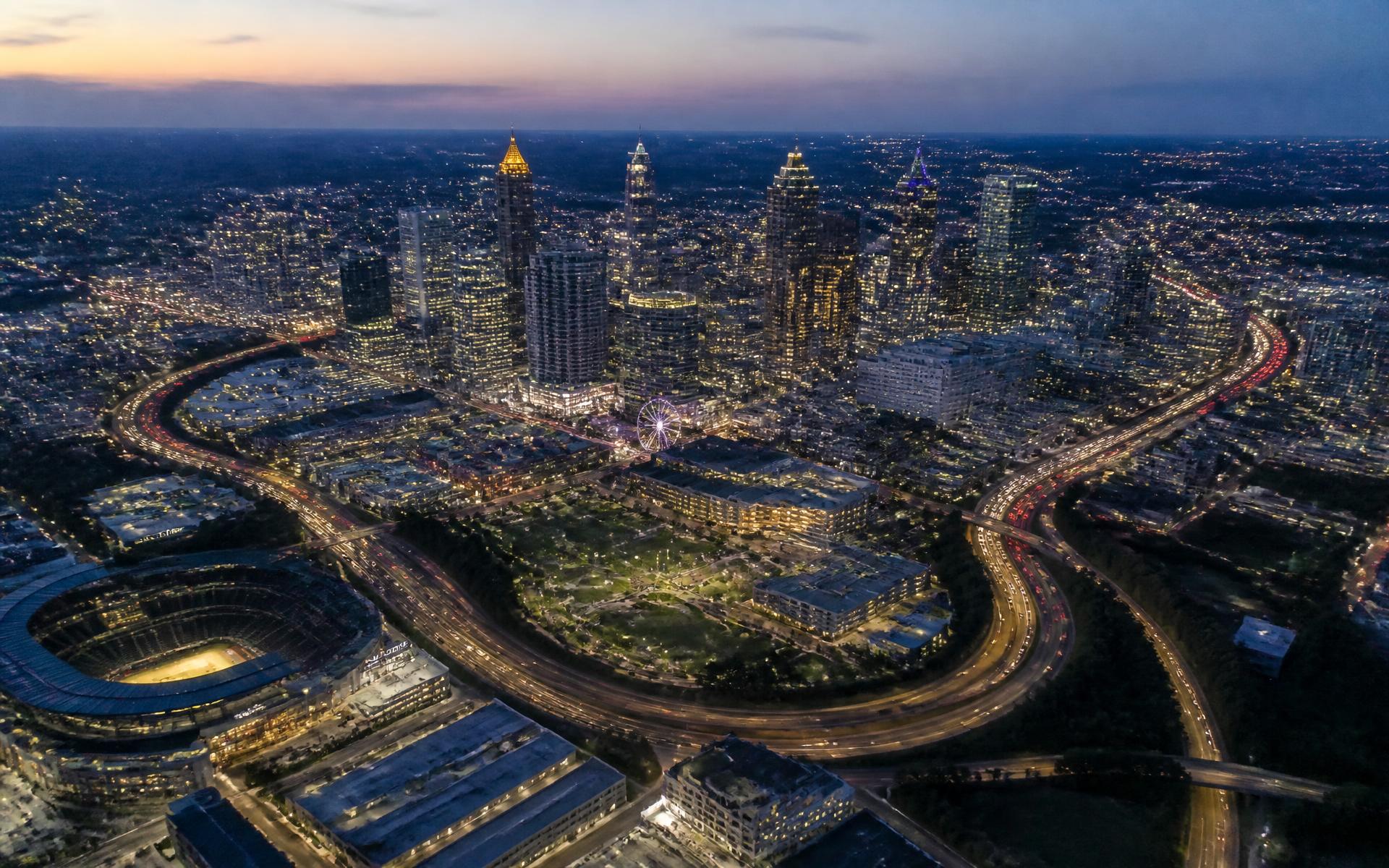
Aerial view of Uptown Charlotte inside the I-277 loop showing its distinct districts

Inside the loop

Uptown districts & sub-neighborhoods

The four wards are the official geography. The districts are how Uptown Charlotte actually behaves block by block — from the Tryon Street spine to Brooklyn Village, Stonewall, the North Tryon arts corridor and the Fourth Ward historic district.

Wards are quadrants. Districts are character.

Uptown Charlotte is organized by four wards drawn from Independence Square outward, but nobody living inside the loop navigates that way. They navigate by district: the office spine on Tryon, the museum block on Levine, the stadium end of Third Ward, the quiet Victorian blocks of Fourth Ward.

This page maps the informal districts onto the formal quadrants so you can tell which one you are standing in — and what that means for noise, walkability, parking and price.

Inside the I-277 loop
1.7 sq mi
Official wards
4
Working districts
10+
Distance between very different places
1 block

01

The Tryon Street spine

Tryon Street runs southwest to northeast through the center of Uptown and divides the wards as decisively as any line on a map. It carries the banking towers, the largest hotels, Founders Hall and the heaviest weekday pedestrian volume in the Carolinas.

Living directly on Tryon means the shortest possible commute and the most consistent street-level activity. It also means event traffic, motorcades and service noise. Buyers who want energy choose Tryon-adjacent; buyers who want quiet choose one block off it.

  • Independence Square (Trade & Tryon) — the point where all four wards meet
  • Founders Hall and the Overstreet Mall network of second-level walkways
  • The heaviest concentration of Class A office space in Charlotte

02

North Tryon and the First Ward arts corridor

North Tryon carries Discovery Place Science, the Charlotte Mecklenburg Library's main branch site, UNC Charlotte Center City and the 7th Street Public Market toward First Ward Park. It is the most institutional stretch of Uptown and the most actively redeveloped.

The district reads younger than the rest of Uptown because of the university presence and the market, and residential product here skews toward newer mid-rise construction around the park.

03

Brooklyn Village and the Second Ward corridor

Second Ward carries the heaviest history in Uptown. Brooklyn was Charlotte's largest Black neighborhood until mid-century urban renewal cleared it; today the same ground holds the Charlotte Convention Center, government buildings and the long-planned Brooklyn Village redevelopment.

Second Ward is the quadrant most likely to change shape over the next decade, which cuts both ways: construction disruption in the near term, new parks and retail in the long term.

04

Third Ward: stadium, ballpark, museum block

Third Ward holds Bank of America Stadium, Truist Field, Romare Bearden Park and the Levine Center for the Arts. On a Panthers Sunday or a Knights homestand it is the loudest quadrant in Uptown; on a Tuesday morning it is one of the greenest.

The Gateway Village end toward Johnson & Wales and the Charlotte Gateway Station site is the district most shaped by transit plans.

05

Fourth Ward: the historic district

Fourth Ward is the only quadrant where Uptown still looks nineteenth century. Victorian houses saved in the 1970s revitalization sit beneath high-rise towers, with Fourth Ward Park and Settlers Cemetery anchoring the blocks.

It is the quietest and most residential of the four, and the district where local historic designation governs exterior changes on many parcels.

06

Stonewall and the southern edge

The Stonewall corridor along the southern rim of the loop has absorbed more new hotel and residential density than any other Uptown street in the past decade, tying the Convention Center to South End across the interstate.

It is the easiest district to leave Uptown from by car and the closest to the LYNX Blue Line's run toward South End.

Interactive

Map the four wards

Filter towers, parks, museums, stadiums, transit and schools inside the I-277 loop.

I-277 / Brookshire FreewayI-277 / John Belk FreewayN Tryon StW Trade StE Trade StS Tryon StW 9th StStonewall StFourth WardFirst WardThird WardSecond WardIndependence Square
Schematic — not to scale

The Wards

Independence Square

All four wards · Center

Trade and Tryon — the corner where the four wards meet, marked by the four bronze statues of Commerce, Industry, Transportation and the Future.

Browse 36 places

Interactive Uptown Charlotte map — 36 landmarks, towers, museums, stadiums, parks, transit stations, schools and markets across First, Second, Third and Fourth Ward inside the I-277 loop, Charlotte, NC 28202. Positions are schematic; verify parcel locations on Mecklenburg County POLARIS.

Questions & Answers

Frequently asked questions

Direct answers to what readers most often ask about this part of Uptown. Each answer cites the primary source it rests on.

All Uptown Charlotte questions →

What are the districts of Uptown Charlotte?

+

Uptown's four wards contain several working districts: the Tryon Street office spine, the North Tryon arts and university corridor in First Ward, the Brooklyn Village and Convention Center corridor in Second Ward, the stadium, ballpark and Levine Center for the Arts blocks in Third Ward, the Fourth Ward historic district, and the Stonewall corridor on the southern edge of the I-277 loop.

Source: Mecklenburg County POLARIS 3G parcel viewer

What is the difference between a ward and a district in Uptown Charlotte?

+

The four wards are the formal quadrants radiating from Independence Square at Trade and Tryon streets. Districts are informal, use-based areas within those quadrants — the museum block, the stadium end, the historic district — and they are what determines the noise, walkability and price of a specific address.

Source: Mecklenburg County POLARIS 3G parcel viewer

Which Uptown Charlotte district is the quietest?

+

The Fourth Ward historic district. Its Victorian blocks around Fourth Ward Park and Settlers Cemetery carry no stadium, no convention center and comparatively little office traffic, which makes it the most residential part of Uptown.

Source: Mecklenburg County POLARIS 3G parcel viewer

Which part of Uptown Charlotte is changing the most?

+

Second Ward. The Brooklyn Village redevelopment on former urban-renewal land and continued Stonewall corridor construction make it the quadrant with the most planned change inside the I-277 loop.

Source: Charlotte-Mecklenburg Historic Landmarks Commission

Topic Cluster

The Four Wards of Uptown Charlotte

First, Second, Third and Fourth Ward — four quadrants, four completely different places.

The Uptown Guide — The Four Wards of Uptown Charlotte

Our Sources

How this page was researched

This guide is independently written and verified against primary public records and official organizations. It is not affiliated with, endorsed by, or representing the City of Charlotte, Charlotte Center City Partners, any condominium association, or any building owner.

Read our full citation methodology and editorial standards
  1. 01
    State of the Center City report and development pipeline

    Charlotte Center City Partners

    Residential population, office inventory, and project pipeline for Uptown.

  2. 02
    Unified Development Ordinance and zoning maps

    City of Charlotte

    Uptown Mixed-Use zoning, height, and streetscape requirements.

  3. 03
    Local historic districts and designated landmarks

    Charlotte-Mecklenburg Historic Landmarks Commission

    Fourth Ward historic district and individually designated buildings.

  4. 04
    POLARIS 3G property and parcel records

    Mecklenburg County GIS

    Parcel boundaries, building footprints, ownership, and sale history.

  5. 05
    Local history collections and archives

    Charlotte Mecklenburg Library — Robinson-Spangler Carolina Room

    Ward history, the Brooklyn neighborhood, and urban renewal record.

Figures such as pricing, dues, assessments, tenancy, and school assignment change over time. Always confirm current details directly with the source before making a decision.

Corrections

Found something out of date?

Buildings change hands, restaurants close, dues get restated, and boundaries move. If something on this page is wrong, tell us what and point to the record — corrections are reviewed against primary sources and published with the page's revision date.

Send correction